
Sold out
PRIMA Celiac Test
PRIMA Celiac Test is useful for anyone who wants to check for any gluten sensitivity, which must then be confirmed by a specialist. In particular...
View full detailsFREE NZ DELIVERY ON ORDERS OVER $70
Home test kits offer a convenient first step when you want a private way to check a common health marker or life-stage question at home, without turning the experience into something more complicated than it needs to be.
Sold out
PRIMA Celiac Test is useful for anyone who wants to check for any gluten sensitivity, which must then be confirmed by a specialist. In particular...
View full details
Save $0.00
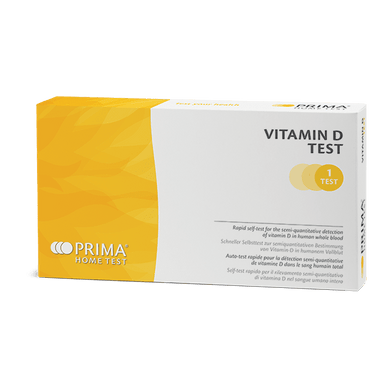
PRIMA Labs Vitamin D Test Kit is a rapid self-test that can semi-quantitatively detect the presence of vitamin D in human whole blood. Vitamin D is...
View full detailsIf you are also browsing everyday self-care and wellness essentials, you can explore our Skin, Beauty & Body Care range.
This collection brings together at-home screening kits for a mix of practical needs, including pregnancy, menopause, vitamin D, iron, digestive concerns, urinary tract infections, prostate health, sperm testing and general self-check options. The main benefit is convenience. You can focus on the concern you want to check, see which sample type the kit uses, and decide on a sensible next step once you have your result.
The easiest way to choose is by the question you want the kit to help answer. Some kits are suited to nutrient-related checks such as vitamin D or iron. Others are more relevant to digestive concerns, hormone changes, fertility, pregnancy or men's health. If privacy, speed and ease matter most, sample type can also help you narrow things down quickly.
It is also worth thinking about what you will do with the result. Some kits may help you decide whether it is time to follow up with a healthcare professional, repeat a check later, or take a closer look at a concern that has been on your mind.
Home test kits are designed for screening and self-checking. They can be useful when you want an early indication, but they are not the same as a full diagnosis. If a result is positive, unclear, unexpected or out of step with how you feel, it is sensible to speak with a healthcare professional about what to do next.
Depending on the kit, you may be able to check areas such as pregnancy, menopause, vitamin D, iron, digestive concerns like celiac or H. pylori, urinary tract infections, prostate health or sperm health.
No. They are best treated as screening tools that can guide your next step. They are useful for convenience and privacy, but they do not replace medical advice or diagnostic testing.
Start with the concern you want to check, then look at sample type, who the kit is intended for and what kind of follow-up the result may point you toward.
Follow up when a result is positive, unclear, unexpected, or when symptoms continue even if the result looks reassuring. If you are unsure, a healthcare professional can help you interpret the result in context.